How to Organize a Team Building Event for 50-200 People
Corporate events for 100+ people often keep awake the employees tasked with organizing them. This article is for exactly those people - to show that when you ask questions like "unconventional team building," "corporate event for large groups," "alternative to a dull indoor integration," or "outdoor team building" - you are not alone. We are here to help.
In this article we will show what you need to think about when planning a large integration, what challenges you may face, how hard it is to please a group, and how easy it is to annoy everyone. First we will cover the theory, and at the end we will share a case study of a real integration we ran for 200 people in Gdansk.
Start by defining the goal of the event
Ask yourself: why are you doing this integration?
Should it be casual fun and networking? Or team building? On the other hand - celebrating company results or onboarding new hires is also worth a dedicated event.
Why does this matter so much?
A poorly defined goal can derail the entire event. If you do not have a clear objective, contradictory elements often get mixed together - tough workshops paired with a dance party, and the result is flat, even frustrating.
The goal acts as a decision filter. You start by choosing the tone of the event - formal or casual. Then it is easier to pick the duration - short and intense, or a full day. Finally you select the program and attractions, which is much easier once the three earlier decisions are made. Without that, you end up with an event for everyone - which means an event for no one.
The most common mistakes at this stage
1. Too many goals at once. We want integration, but also training, rewards, and chill. The solution is very simple - always pick only one primary goal and at most one secondary goal.
2. Misalignment between management and employees. Some want to build culture and values, others just want to have fun. The fix here is a quick survey before planning, or a conversation with team leads. The goal cannot be forced on employees - they also need to want it.
3. Goal not matched to the group. Remember: a team recovering from conflict integrates differently than a new team, and differently than a tight-knit, long-standing one. Talking to team leads helps here too, but you need to ask the right questions - about tenure, cross-department relationships, and any tensions.
4. Confusing integration with a party. They are not the same thing. One is about building relationships, the other is pure entertainment.
5. No measurement. You need to define KPIs - at minimum attendance - and run feedback after the event.
In summary - ask yourself three questions
- What should change after this event?
- Who are we doing this for?
- How will I know it worked?
Event agency or DIY?
Now that you have a goal - should you use an event agency, or try to put the program and attractions together yourself?
We will of course recommend an event agency - these companies exist precisely so that someone else thinks about everything and takes the hardest part off your plate: tying all the elements into one coherent event.
Before you decide to do it yourself, ask yourself why. If the answer is budget, this is often a mistake - agencies usually have negotiated rates with their suppliers, and the total cost can be lower than ordering everything directly. Of course this depends on the agency and it is always worth comparing offers.
If the reason is having your own trusted suppliers - fair warning: building that base is hard work, but yes, it is a real asset.
What becomes a challenge when working without an event agency
1. Transport logistics
Transport pricing is often a black box. Some companies charge less for several smaller vans than for one or two larger coaches. They do not always advise where the coaches can stop so passengers can disembark comfortably. Pulling up one bus at a time with a queue of 200 people is a recipe for frustration before the event even starts.
The solution is 5-6 buses ready to board at the same time, with the group pre-divided into groups of 40-60. Another approach is staggering departure times: if participants stop by their rooms first, set different meeting times so people reach the buses in waves.
2. Location - indoor or outdoor
Best to start with questions: standing or seated? Divided into zones or not? Will there be catering? Only after answering these do you look for a venue that matches. With 200 people, the difficulty is finding a space big enough without breaking the budget.
An outdoor event for 200 people is a real challenge. So look for someone who has done it at least 10 times, has worked with the city, and knows how to split the group into smaller teams efficiently - without queues or frustration. What happens if it rains? How do they keep time? How do they know where participants are? Can they reach them at any moment?
Pay attention to what such companies ask you. If they immediately ask about the hotel and where you will eat, it means they are analyzing the outdoor event through the lens of your specific locations and they are flexible - which is critical with 200 people.
3. Food
After well over a hundred events, we can say with full conviction: food is always the most important part of the program. Every person is happier while eating, and if the food is good, even more so.
For a 200-person event we advise against served dinners and recommend buffets in restaurants or catering. When setting up the meal, logistics are absolutely critical:
- no queues should form,
- pathways to tables must be wide and comfortable,
- spread food across zones,
- clearly separate dishes by diet type (vegetarian, vegan, gluten-free, halal, kosher).
The standard layout of "meat, fruit, bread" is not always the best one. For international groups, this is essential - diets and allergies must be collected during registration, and food labels must be bilingual.
4. Animation and staff
One of the most underestimated elements. For 200 people the minimum is 8-10 well-prepared animators - not students hired at the last minute. Rule of thumb: one animator per max 20-25 participants in active mode, one host per 40-50 people in evening mode.
Every staff member must know exactly what they are doing every minute. Without a run-of-show with precise role assignments, chaos is guaranteed.
5. Plan B - weather, breakdowns, delays
Outdoor events without a Plan B do not count. If it rains - where does the group go? If a coach is late - what does everyone else do? If a catering point fails - what replaces it?
An experienced agency has answers to all these questions 24 hours before the event. Without that, one unexpected situation can ruin the entire day.
6. Real-time communication with participants
With 200 people, SMS and email are not enough. You need an app, a Telegram or WhatsApp group, or a dedicated channel where you can quickly broadcast a schedule, location, or program change during the event. A good standard is also a QR code with the agenda and map - posted prominently and printed on lanyards.
7. Measuring results
After the event you need to check whether the goal was achieved. A short survey (5-7 questions, NPS plus one open question) sent within 48 hours of the event gives the highest response rate. Without it, a year later you will be planning the next event by gut feel, with no idea what actually worked.
Case study: an integration for 200 people in Gdansk
Time for something concrete. Below we describe a project we delivered for an international consulting firm - a group of 200 people, mostly from Scandinavia, on a four-day integration program in Gdansk.
The challenge
The client needed one full evening that combined three elements: active sightseeing for people seeing the city for the first time, informal cross-department networking, and a celebratory dinner closing the conference day. All in English, for 200 people, in one coherent narrative - with no idle gaps where bored people stare at their phones.
What we proposed
A three-act structure for the evening, each act in a different part of the Old Town:
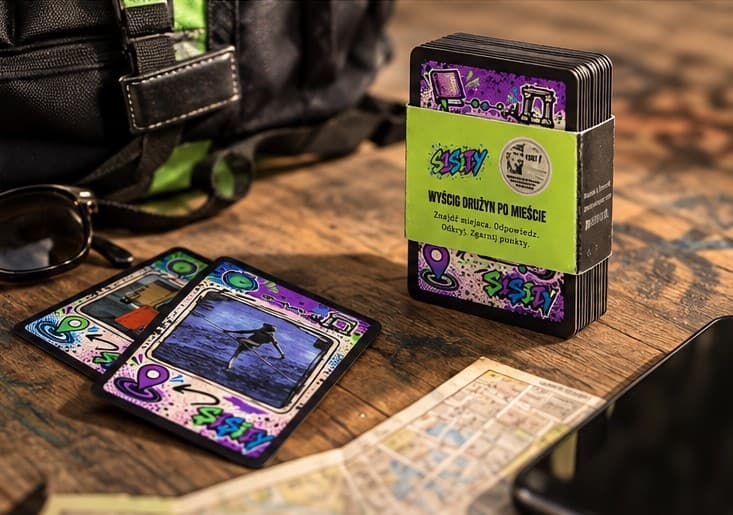
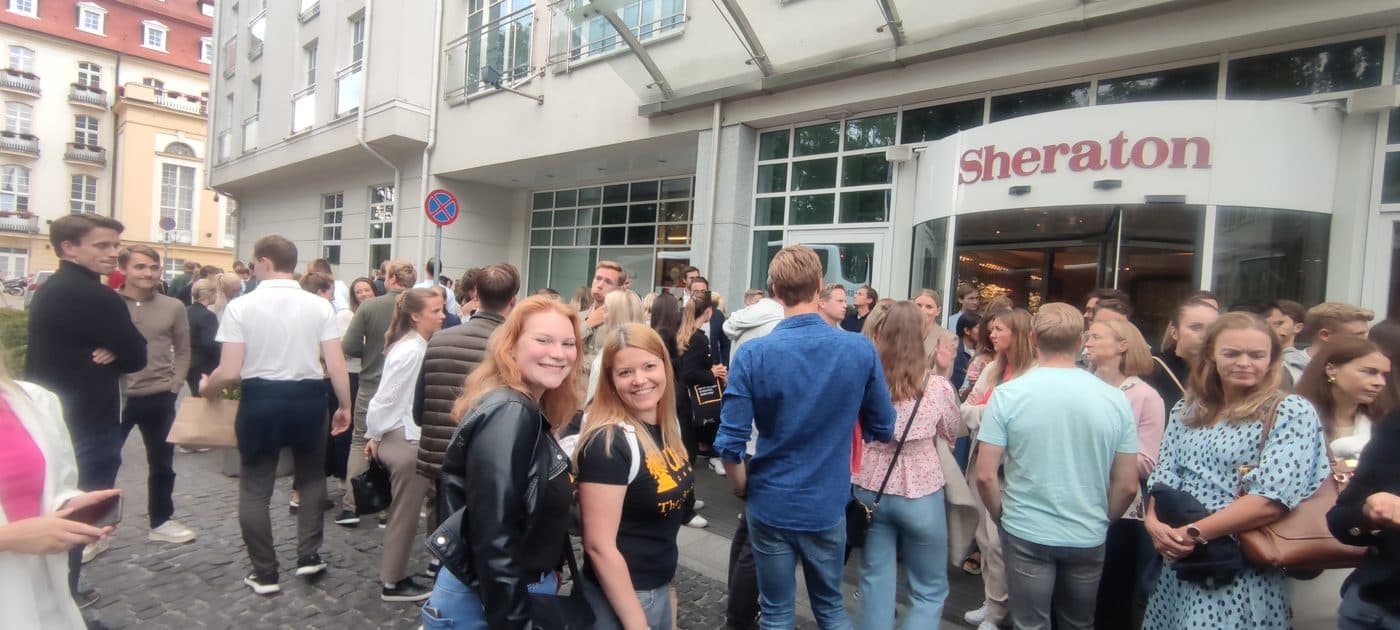
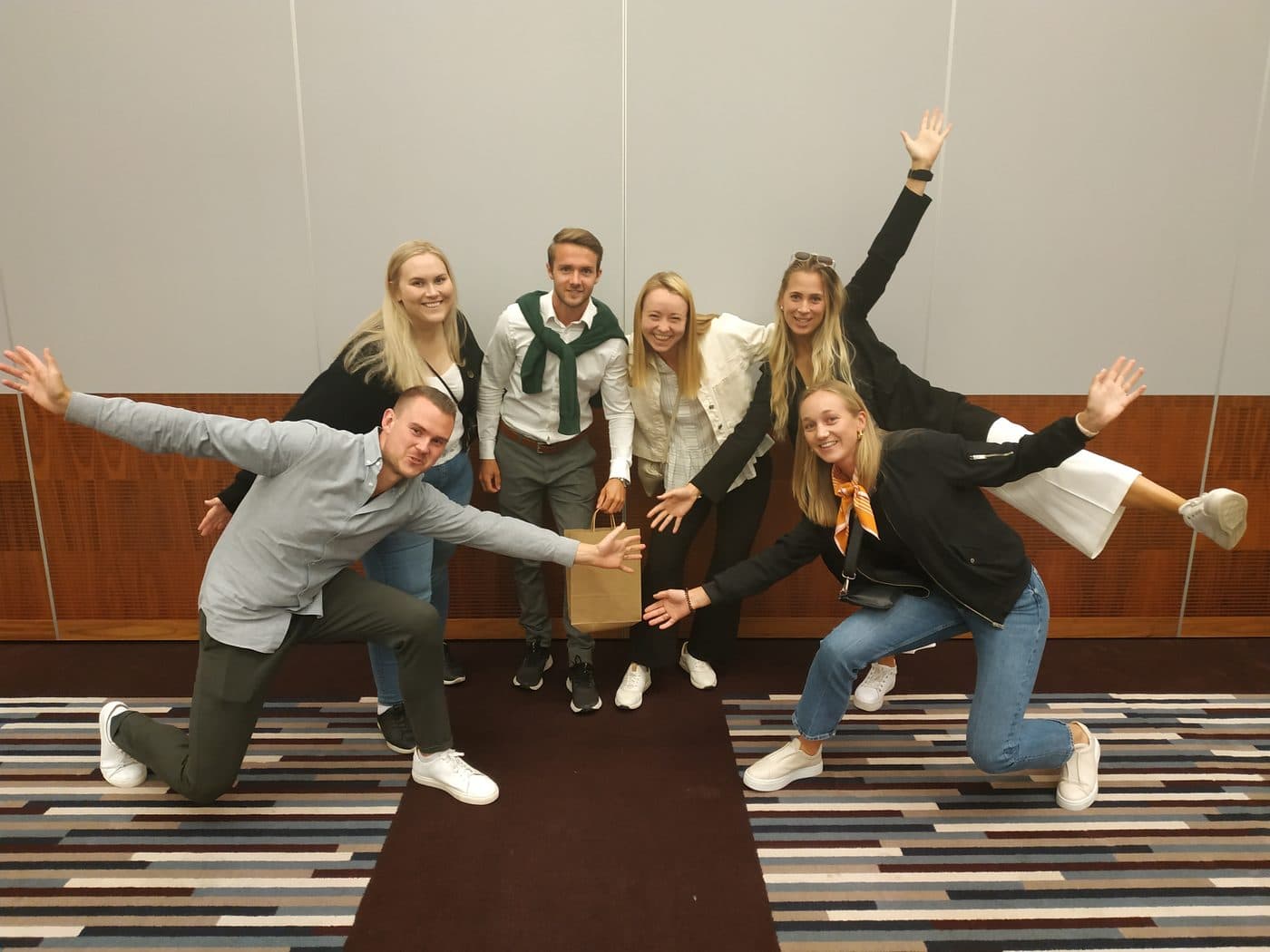
Act 1 - briefing at Sheraton Gdansk (17:30-18:00). After the conference day, in the conference hall, we split the group into 33 teams of 6 people. Each team received a goodie bag with full game materials, lanyards, and an introductory puzzle.
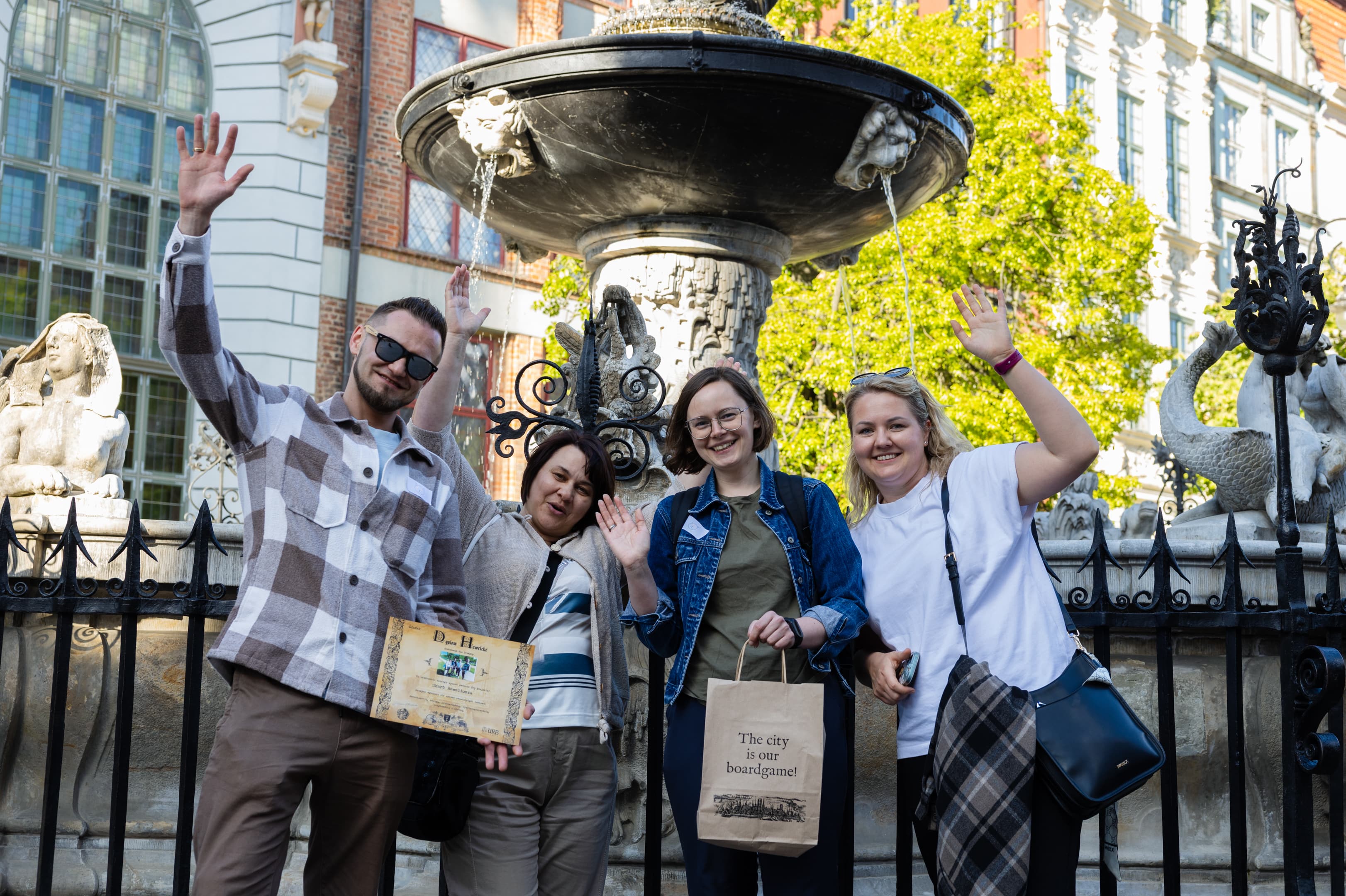
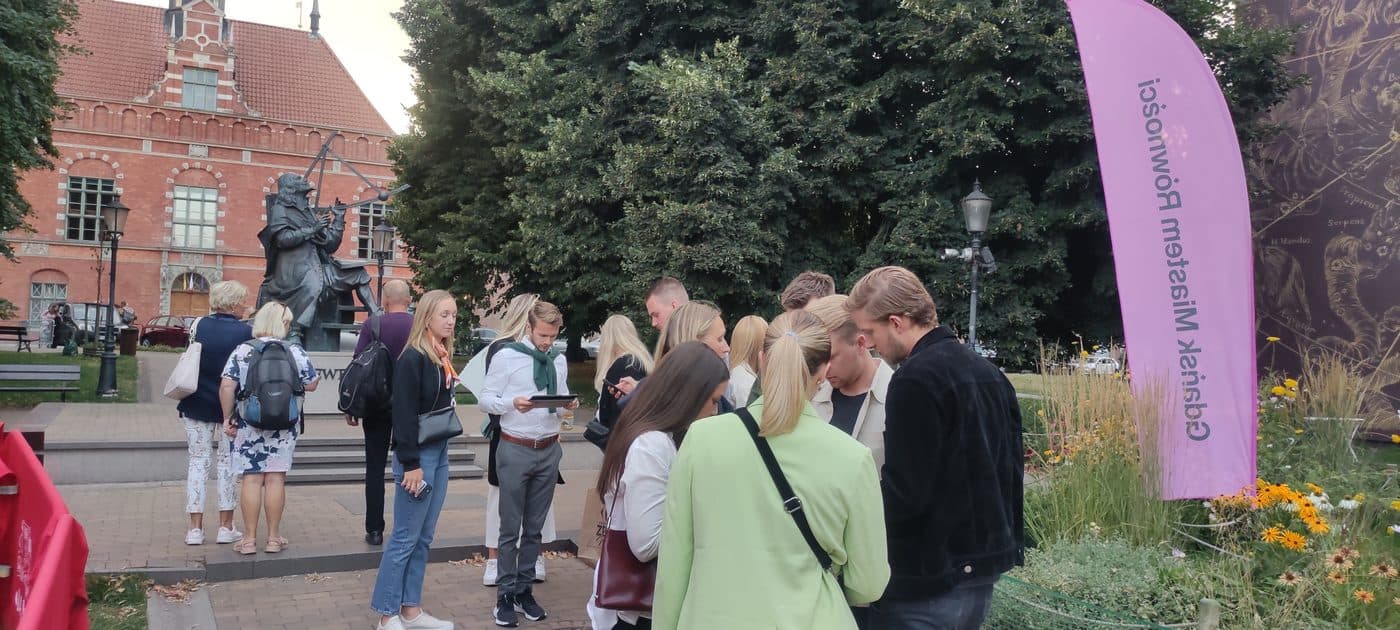
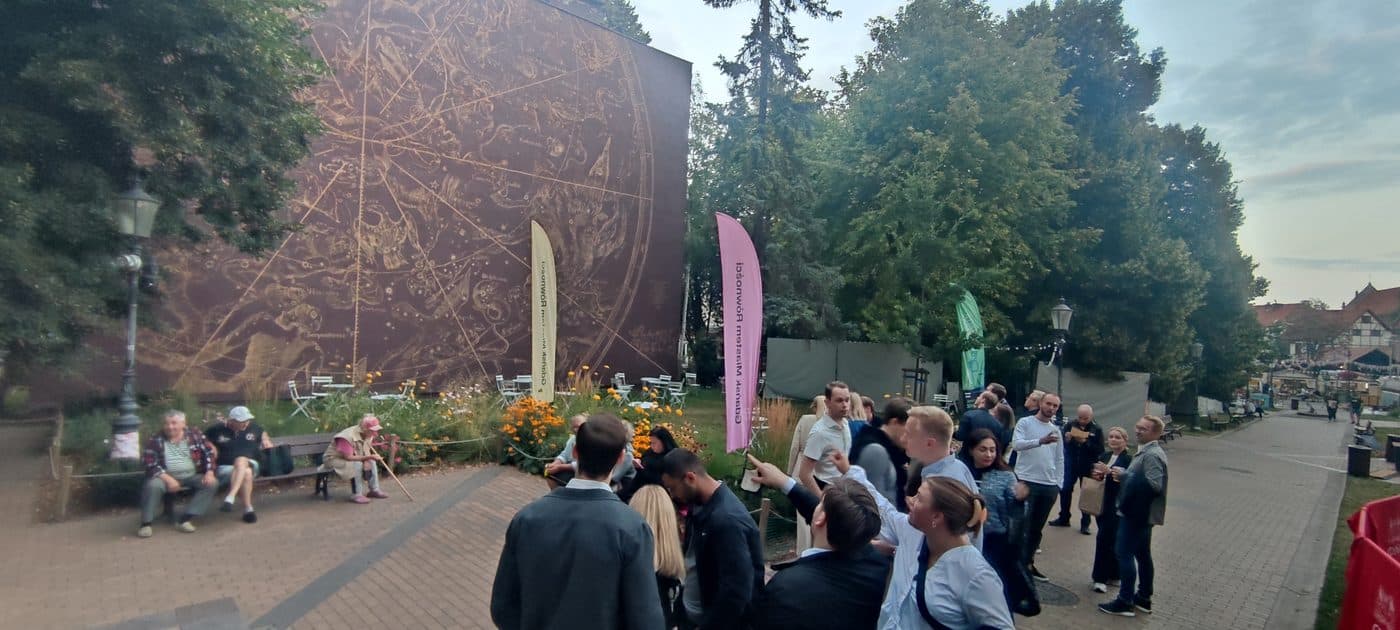
Act 2 - city game across the Old Town (18:00-21:00). A coordinated group exit from the Sheraton, led by 10 URB Games animators in branded t-shirts. The route ran through the Old Market, the Hevelius monument, the constellation mural, Long Market, all the way to the Motlawa river. The astronomical theme - perfect for the Gdansk of Hevelius - let us weave real city history into the puzzles. Tasks were designed to require the whole six-person team: one person reads the clue, another decodes the constellation, a third looks for a detail on the mural, the rest discuss the solution.
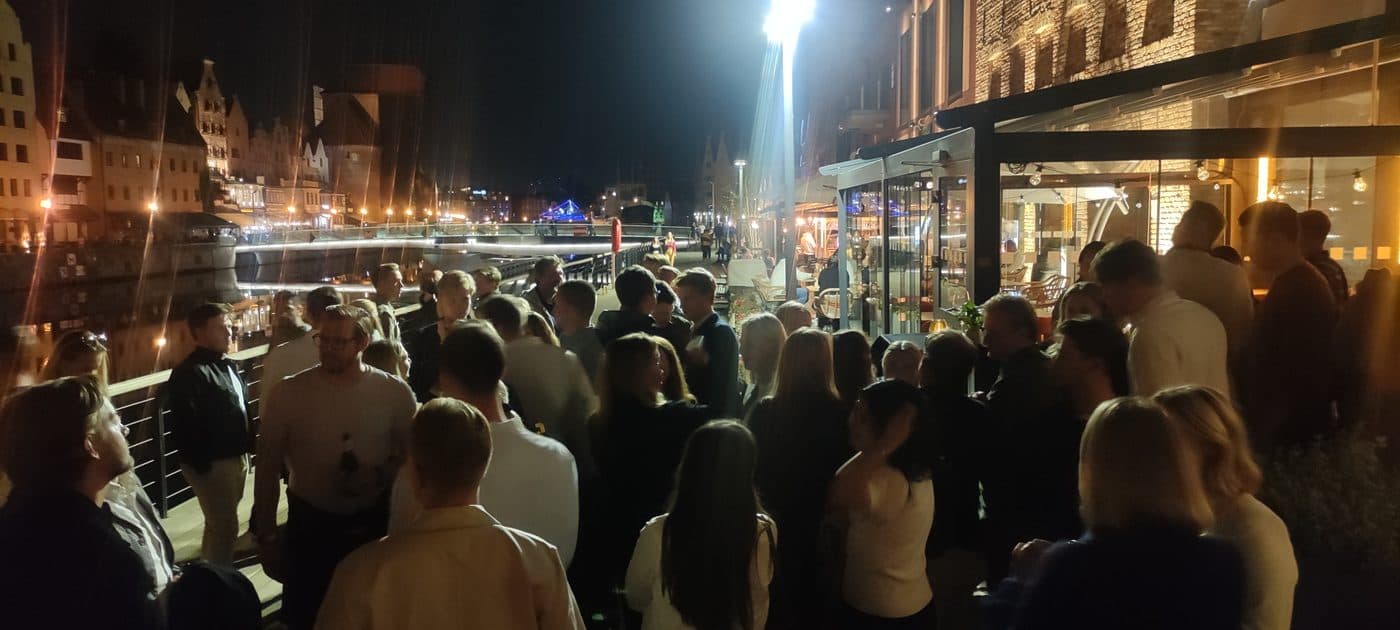
Act 3 - dinner by the Motlawa (21:00-late). The game finale was right next to the riverside restaurant with a view of the Crane. A seamless transition - participants did not have to "move" to a different venue, transport on foot. A buffet with Pomeranian cuisine, a networking zone, drinks, and dinner across three rooms (to avoid queues).
What went well
- Assembly and departure - 200 people left the Sheraton in 7 minutes. The key: teams were ready 10 minutes before departure, and animators stood in visible spots holding team numbers.
- Local theme - Scandinavians who had never visited Gdansk left the game with real knowledge about the city. A comment we will remember: "I had no idea this city was this beautiful."
- Seamless transition to dinner - no transport, no queues, no loose hour where the group disperses. From the game, people walked straight into drinks.
- Six-person teams - large enough that everyone found someone to talk to, small enough that no one could hide in the back.
What we would improve
- The game finale was compressed - the last three teams reached the finish within 4 minutes of each other, and some of them felt that "everyone is already here." Next time we will spread the finale over a longer window, e.g. by giving the last task a wider point range.
- The goodie bag could be lighter - water and paper materials were carried for 3 hours. For a walking group we now deliver water at checkpoints instead of all at the start.
Numbers at the end
- 200 participants, 33 teams of 6, 10 URB Games animators
- 1 base hotel (Sheraton Gdansk), 7 checkpoints across the Old Town, 1 finale restaurant
- 3 hours of game, 2 hours of dinner, 0 minutes of transport breaks
- Post-event NPS: 71
Planning a corporate event in Tricity, Krakow, or Warsaw?
We have been running city games and integrations for over 10 years, in 8 Polish cities. From compact 30-person teams to groups of 200+. If you are planning something similar - reach out, tell us about the group and the goal, and we will tell you whether and how we can help.
urbgames.com | kontakt@urbgames.com

Monika Romanowska
COO at UrbGames
Passionate about city games and event marketing. Organizing unforgettable adventures in 8 Polish cities.