A City Game for Students in Bydgoszcz. 7 Kilometres Is Just the Beginning
A case study of a game for 83 high school students, 21 September 2026
How do you get a large group of young adults to spend two hours running around Bydgoszcz, hunting for details on buildings, solving puzzles, counting points, making strategic decisions - and squeezing in a bit of exam revision along the way?
The answer is simple: give them an engaging city game. In our case, we chose SISITY.
On Monday 21 September, students from the Henryk Sienkiewicz High School No. 1 in Koluszki came to Bydgoszcz to find out - instead of doing a classic sightseeing tour - who would handle a city race best.
The result?
21 teams, 120 minutes of play, 651 cards, 442 locations visited, 528 questions answered and a combined 93 kilometres covered by all teams.
Our challenges and goals for this game
A school group plays by slightly different rules than a corporate one. It is not enough to say: "We meet back here in two hours."
First, you have to keep track of a large number of participants. Second, some move very fast, while others take a much more leisurely pace. Third, if the game is supposed to last exactly two hours, it really has to last two hours - the coach has its own schedule afterwards.
That is why, from the very start, we wanted the game to meet three basic conditions:
- every team could move at its own pace and along its own route,
- even a slower team had a chance to score points and finish the game with a sense of success,
- the game hosts could follow all teams at the same time and react if anything unexpected happened.
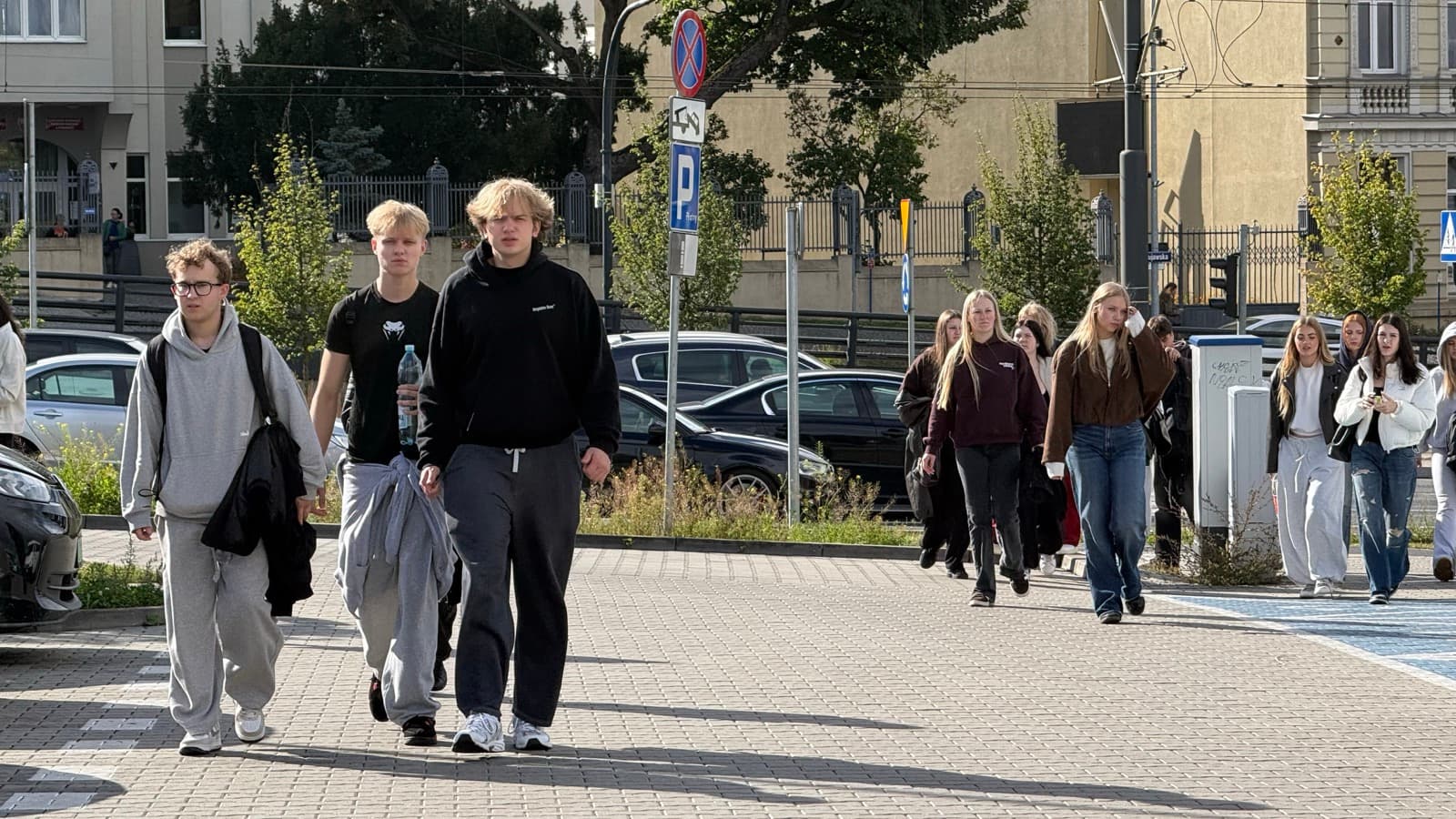
And that is exactly why SISITY suited this group so well. There is no single route with 21 teams marching single file behind a guide. Each team decides for itself where to go.
And then the scheming begins.
How we made it engaging, educational and safe
We design every game individually. As soon as we had agreed on the number of participants, the date and the duration, we started on the part we enjoy most: listing the goals the teachers cared about - without forgetting that for the students it had to be, above all, fun.
We decided that a third of the 30 questions would quietly and engagingly prepare students for their final exams. Then we travelled to Bydgoszcz and tailored the content and tasks to every location. We checked that each route was safe, comfortable and - most importantly - interesting for both eyes and mind.
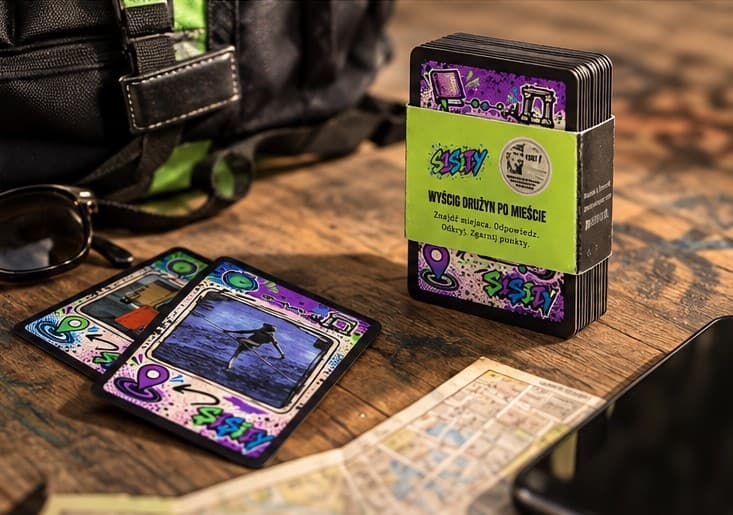
Once the app was ready, we moved on to the cards. We created 651 cards designed specifically for this event. The group of 83 was split into 21 teams, each receiving 31 cards: 30 game cards and one starter card.
Every complete set was additionally protected with a sleeve bearing the school logo, so each team received its own pack, prepared just for them.
Four game hosts looked after the teams' safety. Three of them each followed five teams in real time, and one lucky host had six. We could see how fast the teams were moving, where they were heading and whether they were solving the puzzles. On top of that, two of our animators kept things lively by triggering world events during the game, adding fresh challenges for the players.
A few words about SISITY - a city game for teens and adults
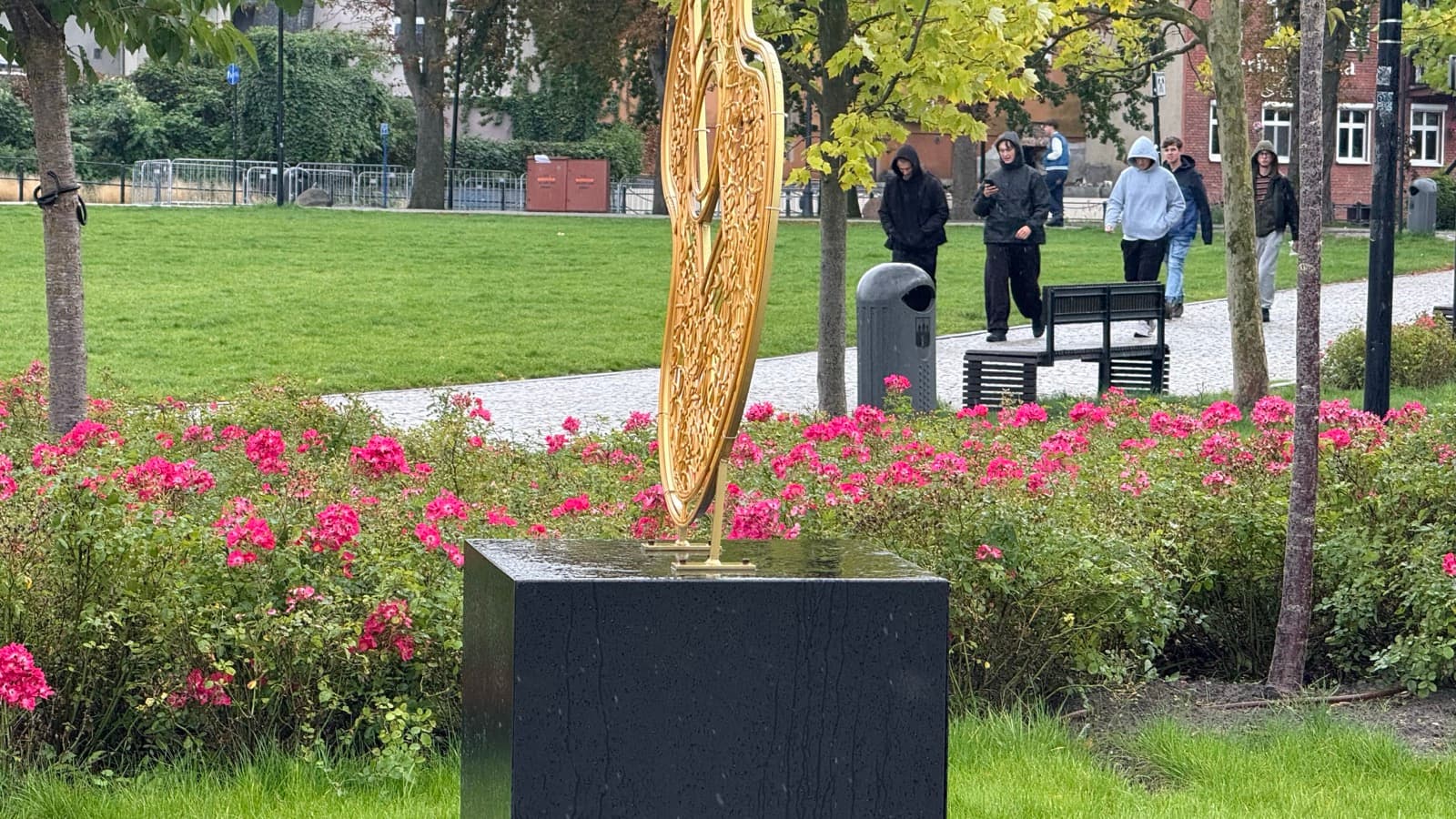
The cards show photos of specific places in Bydgoszcz. But there is no address and no street name. Participants have to track down the object themselves.
And these are not places like the Brandenburg Gate or the Eiffel Tower, which would be hard to miss.
In Bydgoszcz we hid, among other things, bas-reliefs, mosaics, murals, architectural details, figurines and pieces of street furniture - things you can walk past every day without ever noticing.
Card + phone + a bit of scheming
When a team finds the right place, it has to tap the card against a phone. Every card has an NFC chip, and the app also checks the team's location. The object must be found within a set radius for the task to activate.
Only then does the actual task begin. The game includes, among others:
- questions about the history of the place,
- urban legends,
- riddles about a specific object,
- logic tasks,
- maths tasks,
- tasks with hints,
- timed tasks, where the points on offer shrink with every passing minute.
So simply finding the place is not enough.
You have to get there, recognise the right object, activate the card, read the task and then give the correct answer.
And the clock is ticking.
A bit of history, a bit of maths and... a bit of exam prep
Since this time we were playing with high school students, we decided to sneak in something that might come in handy beyond Bydgoszcz.
Among the tasks were quite a few questions based on topics that appear in the compulsory Polish final exams (matura).
But we did not want to turn the game into a two-hour exam paper. Quite the opposite. The questions were woven into the gameplay so that participants solved them while chasing more points.
A bit of history while hunting for an urban detail. A bit of maths at the next task. A bit of logical thinking. And a bit of knowledge someone might still use in their exam.
You could call it a very unofficial form of exam revision. And a far more enjoyable one than sitting over a practice paper.
There is no single route. And that is the point
One of the key elements of SISITY is that each team chooses its own route. Every team gets a set of locations but does not have to visit them in any particular order.
Some might head towards Mill Island. Others pick a completely different direction. Others still quickly start working out which tasks are worth the most points.
And that is where real strategy kicks in.
Because in SISITY, the winner is not the team that simply walks the most kilometres. What counts is the number of points scored. So teams have to keep calculating:
- Is it worth going further?
- Is this task worth a lot of points?
- Can we fit in one more location?
- Will a rival team get there first?
- Or instead of running across half the city, is it better to do three tasks closer by?
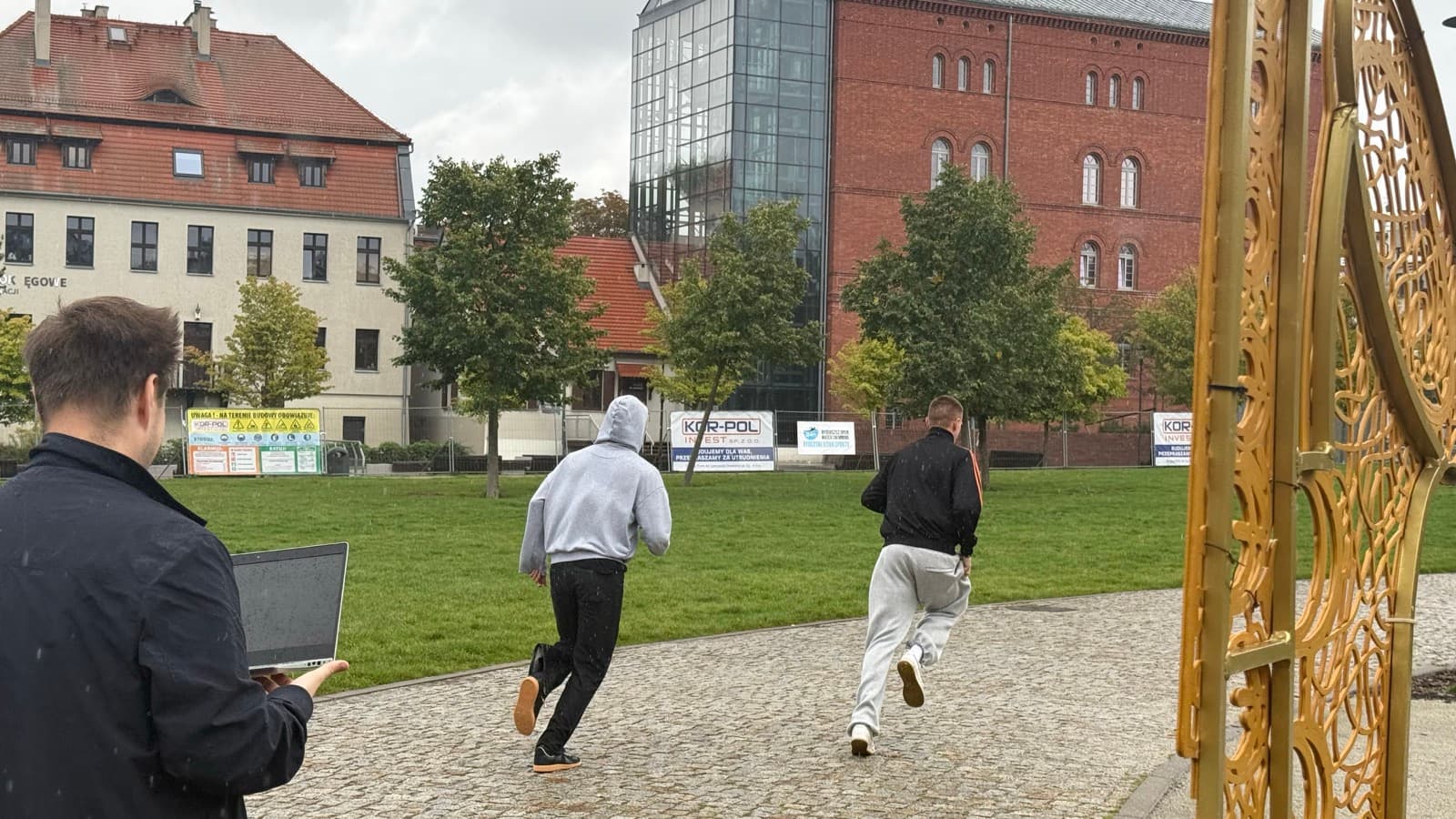
In practice, the students switched into strategy mode very quickly.
528 questions and 442 locations
Once the game was over, we could sum up the results. Within 120 minutes, all teams together:
visited 442 locations and answered 528 questions.
That means a lot was happening in Bydgoszcz over those two hours. The combined distance covered by all teams came to a whopping 93 kilometres.
Mathematically speaking, the students gave themselves a solid lesson in geography, history, maths and PE all at once. Without a single interactive whiteboard.
The rain wanted to play too
As if there was not enough excitement already, one more participant showed up in Bydgoszcz during the game. The rain. And not just a token drizzle.
Fortunately, SISITY is ready for less-than-ideal weather too. The physical materials are protected so that they keep working in the rain. So the game went on.
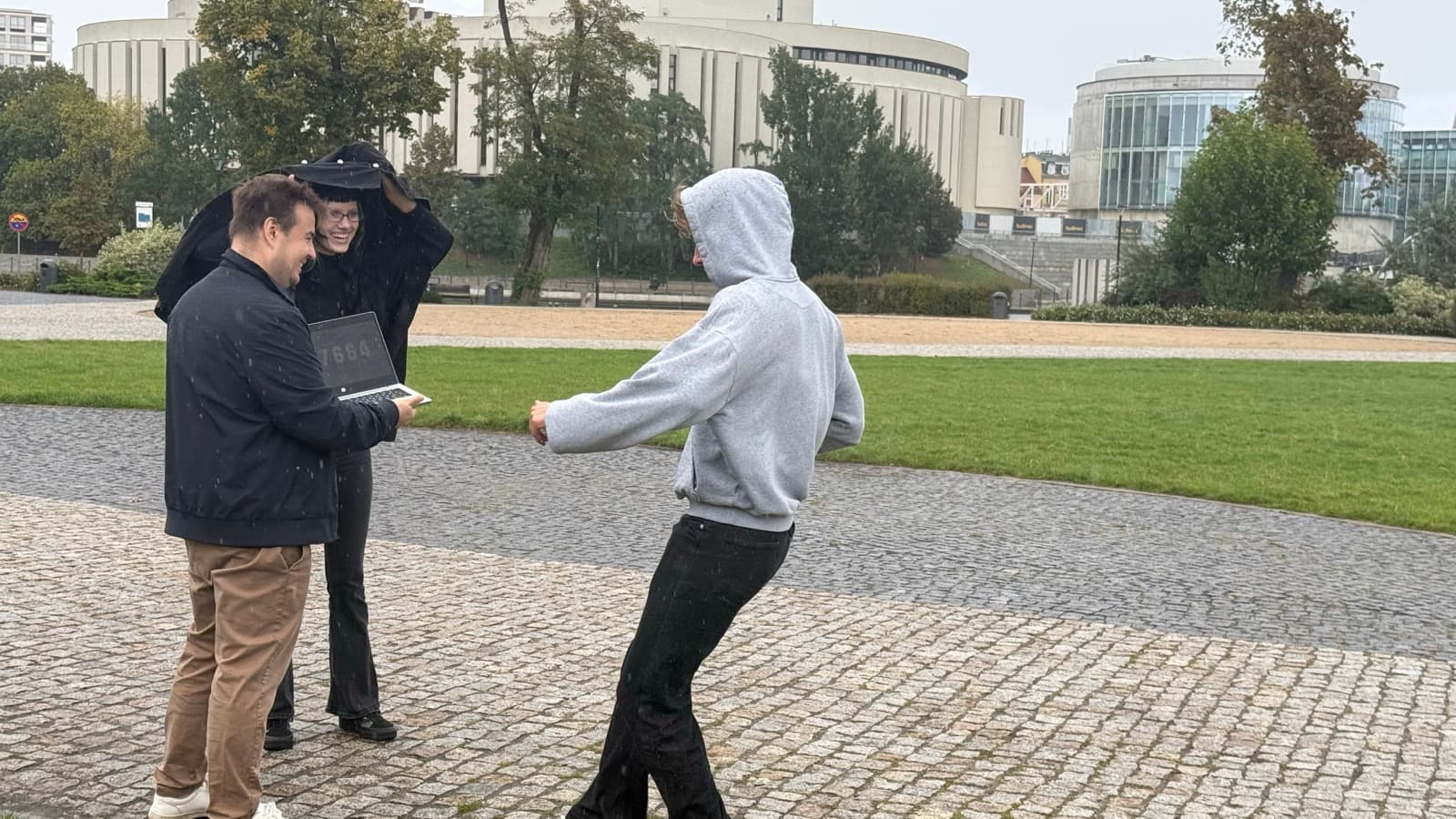
Besides, with a 120-minute limit there was no time to sit down and wait for the weather to improve. Points do not score themselves - you had to keep moving.
Who won? Not the team that reached the finish first
The whole start, including handing out materials and explaining the rules, took about 15 minutes.
The winning team was not the first to reach the finish. It won because, in the same amount of time, it scored more points, answered questions better and took part in the world events. The team that crossed the finish line first ended up in 5th place.
Our Monday champion was a team with the charming name Dyrdymałki (roughly: "Nonsense"). And they did it very efficiently.
They covered only 6.4 km, while most teams passed the 7 km mark and one even topped 8 km.
So more walking does not always mean more points. In this case, Dyrdymałki planned their route better and made better use of the available tasks.
We did not plan any prizes. The students changed our minds
Before the game started, we had not planned any extra prizes. There were going to be points, results and, of course, the satisfaction of winning.
But after two hours of watching how intensely the participants threw themselves into the competition, we decided we had to add something.
So the top three teams received sweet treats from us. It was not in the original script - it was a spontaneous decision after seeing how hooked the students were on the game.
What did the participants say?
After the game we collected feedback from the participants. A few comments really stuck with us:
"The most modern game we have ever played."
"The best city game in Bydgoszcz."
"A completely different game from the classic, paper-only ones."
"A great mix of technology and physical objects."
Participants mostly highlighted the combination of technology and physical cards, the freedom to choose their own route, discovering less obvious places, and the competitive element.
And that last element probably made the biggest difference. Because when students decide for themselves where to go, how many points they want and whether it is worth running another few hundred metres, ordinary sightseeing starts to look a little different.
What did this event teach us?
The SISITY game for 83 high school students in Bydgoszcz showed us that a game designed for exploring a city, yet written to help with exam preparation, does not have to be boring and can engage everyone. All without lining up 21 teams in a queue for a single monument.
That is the biggest difference between a classic city game and SISITY. Participants do not get one route and do not follow a guide.
They make their own decisions. And every decision can affect the result.
There is another way to explore a city
SISITY lets you see a city a little differently. Instead of walking past yet another tenement house, you have to find a specific detail on it. Instead of just reading about a place's history, you have to answer a question about it. Instead of getting a ready-made route, you have to plan it yourself.
And instead of calmly strolling back to the coach after two hours, you might discover you have just run over 7 kilometres in the rain, solving history and maths questions along the way.
All in all, a pretty productive Monday.
Planning a school trip to Bydgoszcz?
We can prepare SISITY for school groups, class trips, summer camps and larger youth groups.
We tailor the game to the number of participants, the age of the group, the time available, the city and the nature of the event. We can also prepare questions linked to a specific curriculum or trip theme - or, as with the students from Koluszki, sneak in some material that comes in handy before the final exams.
Who says revising history, maths or logical thinking has to happen at a school desk? Sometimes you can do it running around Bydgoszcz with an NFC card in your hand.

Monika Romanowska
COO at UrbGames
Passionate about city games and event marketing. Organizing unforgettable adventures in 8 Polish cities.